Fabric Apps: Dont Delete Power BI Yet
Build data apps with Microsoft Fabric Apps and Fabricator using Power BI semantic models, Rayfin SDK and VS Code
Key insights
- Fabric Apps build full web applications that sit on top of your Power BI semantic model and do not replace core Power BI reports.
Keep existing reports for standard self-service analytics and use apps for more interactive or transactional experiences. - Fabricator and the Rayfin SDK are the common starting tools to create Fabric Apps.
Install and connect them to your semantic model to scaffold projects quickly. - AI-powered prompts in Fabricator generate app pages, including slicers and filters and interactive visuals, so you can produce usable interfaces with minimal code.
Prompts speed development while preserving the semantic model as the single source of truth. - Design mode plus code editing (for example via VS Code) lets you refine generated pages and add custom logic.
Use manual edits when you need precise layout, behavior, or integrations beyond the template. - Managed hosting means Microsoft handles deployment, authentication, and backend services while apps query the same semantic model for consistent data.
The platform also supports advanced logic like DAX User-Defined Functions for reusable calculations. - Do not delete reports hastily: keep self-service analytics in Power BI and adopt Fabric Apps for targeted, transactional-style apps or custom UX.
Expect the Power BI developer role to evolve as apps expand beyond the report canvas.
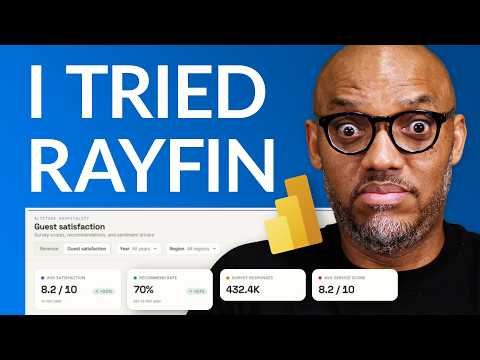
In a recent YouTube video from Guy in a Cube, host Patrick LeBlanc walks viewers through how to build data-driven web applications using Fabric Apps and the Fabricator tool. The demonstration shows how developers can connect directly to an existing Power BI semantic model and generate application pages quickly with AI-powered prompts. Consequently, the video frames Fabric Apps as a complementary capability rather than a replacement for traditional reports, and it urges teams to avoid deleting proven Power BI reports too hastily.
What the Video Demonstrates
LeBlanc begins by outlining the prerequisites and then installs the Fabricator, a community tool that scaffolds a project from a semantic model. He creates a first app, uses prompts to add slicers and visuals, and shows how pages appear in the Fabric service. Moreover, the walkthrough highlights a mix of design-mode convenience and manual code access, helping viewers see both the speed and the control available.
Throughout the video, the presenter toggles between prompt-driven generation and code editing to emphasize flexibility. He also previews Copilot-like modes that assist with layout and filtering logic, which can speed up prototyping. Therefore, developers can quickly produce working interfaces and then refine them for production needs.
Getting Started with Fabricator
The video explains that you need a working Power BI semantic model and the Rayfin SDK or similar tooling to use the Fabricator. LeBlanc shows how the tool reads the semantic model to generate pages and UI components, which keeps data logic centralized and consistent. At the same time, he notes that the tool and the feature set are in preview, so teams should plan pilots rather than full migrations immediately.
In addition, the demo points out a GitHub project named Rayfin Fabricator as an example implementation that developers can review for patterns and inspiration. While the code generation accelerates development, the presenter stresses that integrating the generated output with your CI/CD and governance processes remains essential. Thus, teams should evaluate the Fabricator output against their standards for security, testing, and maintainability.
Building Apps with AI Prompts
A central part of the video shows how AI-driven prompts can add interactive elements such as slicers, filters, and visuals by interpreting the semantic model. This approach reduces boilerplate work and allows non-front-end specialists to prototype useful interfaces rapidly. However, LeBlanc also demonstrates that the generated pages may require manual tweaks, especially for custom interactions and performance tuning.
Importantly, using the existing semantic model helps avoid data drift and reduces the risk of AI-induced inaccuracies, because queries and measures still rely on trusted definitions. The demo also touches on using DAX and user-defined functions to keep advanced logic in the model, which supports both reports and apps. Consequently, the pairing of AI prompts with a stable semantic layer offers speed without discarding governance, but it does not eliminate the need for human review.
Customization and Developer Workflow
LeBlanc alternates between a design mode that simplifies layout and direct code editing in VS Code to refine the generated app. This hybrid workflow lets teams start visually and then switch to code for edge cases, integrations, or branding requirements. Meanwhile, the ability to view the app in the Fabric service and iterate quickly shortens feedback loops between data teams and business users.
Despite the convenience, the video highlights that moving to app-based interfaces changes developer responsibilities and collaboration patterns. Developers must now balance UI concerns, accessibility, and lifecycle management in addition to data modeling. Therefore, organizations should plan role adjustments and provide training so that Power BI developers can expand into these broader application responsibilities.
Tradeoffs, Risks, and Practical Recommendations
Ultimately, the video makes clear that Fabric Apps are not a one-for-one replacement for Power BI reports; instead, they offer a different set of tradeoffs between speed, flexibility, and maturity. On one hand, apps enable rapid, interactive experiences and reduce the need to duplicate datasets; on the other hand, they remain in preview and lack the long-term tooling maturity of established reports. Consequently, teams should weigh the benefits of faster prototyping against the risks of committing business-critical workflows to preview features.
Security, performance, and governance are additional considerations that the video underscores. While Microsoft manages hosting and authentication for these apps, teams may sacrifice some control compared with self-hosted solutions and must validate performance at scale. Therefore, a prudent path is to pilot Fabric Apps for targeted scenarios, retain core reports for broader analytics, and keep the semantic model as the single source of truth for both approaches.
In conclusion, the Guy in a Cube video provides a clear, pragmatic tour of what is possible with Fabric Apps and the Fabricator, and it emphasizes collaboration between AI-driven tools and developer oversight. As organizations experiment, they should document lessons, update governance, and avoid hasty migrations away from proven reporting investments. By balancing innovation with caution, teams can adopt new app capabilities while preserving analytical consistency and reliability.

Keywords
Power BI vs Fabric Apps, Microsoft Fabric Apps, migrate Power BI to Fabric, can Fabric replace Power BI, Power BI report migration, Fabric dashboards vs Power BI, avoid deleting Power BI reports, future of Power BI